
Leveraging Science and Technology to Discover and Develop Next Generation of Medicines
Dedicated to bringing new medicines to help patients
Cardiorenal Disease
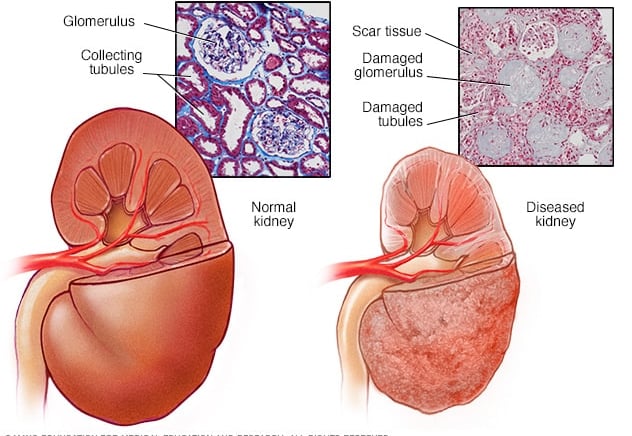
Cardiorenal disease is a progressive, stealth, common and debilitating renal dysfunction condition that affects nearly 1 in 10 people worldwide. More than 30 million people have renal disease in the US and over 100 Million worldwide. The prevalence of CKD has been increasing over the last several decades. People living with CKD progressively lose kidney function, and in many cases may not know that they have CKD until it has reached its later stages.
CKD is a highly prevalent renal disease with high unmet medical need. In addition to the increasing prevalence over the years and no drugs targeting CKD directly, CKD has become to be known as a ‘disease multiplier’ and thus not a disease to be studied in isolation. Both hypertension and diabetes are major risk factors leading to CKD. Nearly 40% of heart failure patients have CKD. Patients living with diabetes and early kidney disease may have shorter life expectancy compared to a healthy person. In addition to chronic kidney disease, there are a few rare/orphan diseases that can lead to End-Stage Renal Failure (ESRD). Renal diseases include,
• Chronic Kidney Disease (CKD)
• Acute Renal Failure (Acute impaired kidney function)
• Focal Segmental Glomerulosclerosis (FSGS)
• Immunoglobulin A Nephropathy (IgAN)
Both FSGS and IgAN are rare/orphan renal diseases that can lead to End-Stage Renal Disease (ESRD).
Immunoglobulin A Nephropathy (IgAN) is a RARE kidney disorder affecting 100,000 people in the US alone. Nearly 20-40% of patients Progress to End-Stage Renal Disease (ESRD). Immunoglobulin A (IgA), attacks pathogens and fight IgA Nephropathy (IgAN), the antibody IgA accumulates in Glomeruli causing Inflammation (glomerulonephritis) and gradually imparing glomeruli filtering ability.
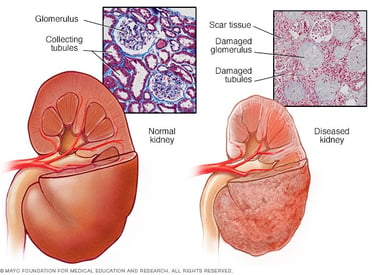
Focal Segmental Glomerulosclerosis (FSGS) is also a RARE renal disorder characterized by scarring (sclerosis) of the glomeruli (filtering units) in kidneys. Scarring occurs in small (focal) sections (segmental) of the fiklters of the kidneys.
Pipeline
INVENT Pharmaceuticals has created its multi-asset pipeline of safer and highly effective small molecule drug candidates*.
INVENT CVRPM
Cardiovascular-Renal-Pulmonary-Metabolic (CVRPM):
• Cardio-Renal disease
• Cardio-Pulmonary disease
• ATTR-CM (Transthyretin Amyloidosis Cardiomyopathy)
• Heart Failure
• Pulmonary Fibrosis
• MASH (Metabolic Dysfunction-Associated Steatohepatitis)
INVENT Neuro
Neurological and Neuropsychiatric disorders:
• Alzheimer's Disease (AD) and CIAS
• GAD, MDD, ADHD
INVENT Fibrotic
• Neuroendocrine Tumors (SI-NET)
• Liver Fibrosis


Advancing Therapies for People Living with...
Cardiopulmonary Disease
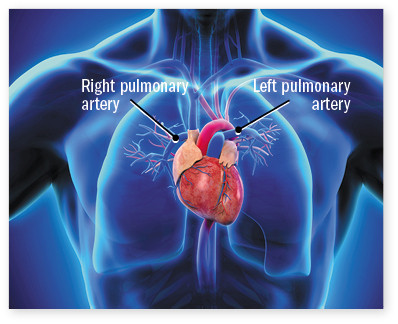
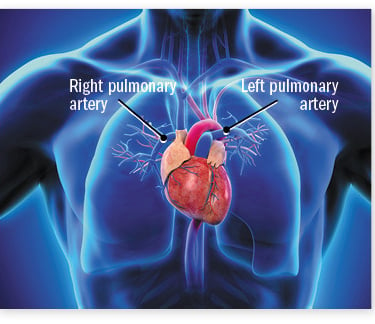
PAH is a Cardiopulmonary disease that is progressive and potentially fatal disease affecting Lung function and Heart. PAH is a severe life-threatening disease that deteriorates rapidly if left untreated. PAH is a congenital heart disease and it is fatal and progressive. PAH can also develop as a consequence of Idiopathic Pulmonary Fibrosis, COPD, Hypoxia, Portal Hypertension, or HIV infection. Idiopathic Pulmonary Fibrosis (IPF) Idiopathic Pulmonary Fibrosis (IPF) is a rare, chronic, progressive, irreversible and usually fatal interstitial lung disease. IPF causes shortness of breath and lung damage resulting in life-threatening respiratory failure with high mortality rate. IPF affects nearly 100,000 people in the US; IPF Patients live only 2-5 years post diagnosis.


Alzheimer's Disease is a neurodegenerative disease. AD afflicts more than 6 million people over the age of 65 in USA alone. This number will increase to nearly 12.7 million by 2050. Alzheimer’s Disease and related dementias cost the U.S. $355 Billion in 2021 and this economic burden could increase to $1.1 Trillion over the next 30 years. Alzheimer’s Disease (AD) is a Progressive Neurodegenerative disease that affects Memory, Cognition, Judgment, Language and Behavior resulting in Severe Cognitive Impairment, gradual Loss of Cognitive Function Related to Memory, Reasoning, Impaired Judgment and Orientation. Behavioral Changes in AD patients include Confusion, Depression and Aggression. The Cognitive and Behavioral Dysfunction is due to Altered Neuronal Function and Neuronal Loss in the Hippocampus and Cerebral Cortex.
Cognitive Impairment Associated with Schizophrenia (CIAS)
Schizophrenia afflicts over 21 million people globally. In the United States alone, about 2.8 million adults suffer from Schizophrenia, a serious mental illness. All Schizophrenia patients have Cognitive Impairment Associated with Schizophrenia (CIAS). CIAS is a major cause of disability in Schizophrenia patients and it poses a high unmet medical need. Schizophrenia is a chronic neuropsychiatric disorder whose symptoms include psychosis, hellucinations, delusions, paranoia, cognitive impairment, reduced motivation and social skills. Schizophrenia patients have significantly higher risk of premature mortality (death at younger age). Nearly 5% of schizophrenia patients die by suicide and the risk is highest in early stages of onset. Half of schizophrenia patients also have co-occurring mental and/or behavioral health disorders. U.S. Economic burden of schizophrenia is disproportionately higher compared to other disorders. Antipsychotic drugs are used for treating psychotic symptoms but there are no approved therapeutics for treatment of Cognitive Impairment Associated with Schizophrenia (CIAS). Most serious adverse side effects from long-term use of old and new medicines include tardive dyskinesia, it makes facial, tongue, and neck muscles move uncontrollably and can be permanent. Other common side effects include seizures, nausea, dizziness, and blurred vision.
Neuropsychitaric Disorders
General Anxiety Disorder (GAD)
Over 40 Million people in the U.S. live with Anxiety disorders. Nearly 20% U.S. adults and 32% adolescents suffer from one or more types of Anxiety disorders. Five major Anxiety disorders include General Anxiety disorder, Social Anxiety disorder, Panic disorder, Post-Traumatic Stress disorder (PTSD) and Obsessive-Compulsive disorder (OCD).
Major Depressive Disorder (MDD)
Nearly 17 Million people in USA and 300 Million people worldwide suffer from MDD. Over 800,000 patients per year commit suicide, which is the second leading cause of death in patients in the age of 15-29 year old.
Attention Deficit Hyperactivity Disorder (ADHD)
ADHD is one of the most common disorders in children and it continues into adolescence and into adulthood. One third of children retain ADHD into adulthood. Estimated 6.1 Million children and 9 Million adults were diagnosed with ADHD which is over 18% increase in ADHD patients within a decade. Current medicines used for the treatment of these mental disorders (CNS disorders) have serious and harmful adverse side effects including substance dependency, addiction, loss of appetite, loss of sleep, sexual dysfunction (among adults) and suicidal potential risk. Current treatments have limited efficacy (only 1/3 of patients are helped) and slow onset of action with multiple adverse side effects. ADHD is a significant high unmet medical need. Safer and effective drugs for treatment of ADHD is a significant unmet medical need.
© 2026 INVENT Pharmaceuticals. All rights reserved.